
Oregon Property Valuation: Legal Framework and Market Analysis
Price it right. Defend it legally. Build CMAs that win listings and withstand scrutiny in Oregon's evolving market.
Course Description
This 4.5-hour continuing education course gives Oregon real estate brokers the legal and analytical foundation for pricing property: where broker pricing ends and licensed appraisal begins, and how value and markets actually work.
You will learn the legal framework that governs broker opinions of value in Oregon, navigate the state's land use system, including Urban Growth Boundaries and House Bill 2001 middle housing rules, and apply the principles of value and market analysis to real pricing decisions.
Modules Include:
- Legal Framework for Valuation
- Principles of Value & Market Analysis
Course Preview
Valuation in Oregon: The Two-Track System
Oregon law maintains a strict legal divide between real estate licensees and state-certified appraisers. This separation is defined in state statutes that govern brokers and appraisers separately. Certified appraisers perform appraisals subject to the Uniform Standards of Professional Appraisal Practice (USPAP).
As a broker, your authority is different. You can give opinions on price or value using a Competitive Market Analysis (CMA) or a Letter of Opinion, which is often called a Broker Price Opinion (BPO). However, you must never represent this as an appraised value. Oregon law defines your value conclusion simply as an estimated worth or price, which is completely separate from formal appraisal standards.
Broker Authority: CMA and Letter of Opinion
Your right to estimate price exists as a legal exception to general appraisal laws. State statutes authorize you to provide two specific deliverables:
- Competitive Market Analysis (CMA): A process used to recommend a listing or purchase price. The law defines this strictly as a tool to help you secure listings or write offers.
- Letter of Opinion: The formal written document that states your conclusion regarding a recommended price.
Although the industry commonly uses the term “Broker Price Opinion” or “BPO,” Oregon law establishes “Letter of Opinion” as the legal term. This is a document expressing a licensee’s conclusion regarding the price or lease terms of real estate. When you issue this report, you are creating a Letter of Opinion under state law, regardless of what your software calls it. State administrative rules make it clear that “value” in your Letter of Opinion means only an estimated worth or price, nothing more. You are providing a pricing recommendation based on market competition, not a USPAP-compliant appraisal.
Under Oregon administrative rules, what does the word "value" mean when it appears in a broker's Letter of Opinion?
Under Oregon's two-track valuation system, what governs the appraisals performed by state-certified appraisers?
Permissible Purposes and Limitations
When you write a Letter of Opinion, the work must remain within your normal course of business and serve specific, authorized purposes. State rules allow you to prepare these opinions to help pursue a listing agreement, assist a buyer in making an offer, or provide a broker’s price opinion. You can also perform a lending collateral analysis or default collateral analysis, but only for a financial institution’s internal use.
You cannot provide valuation services for lawsuits, tax appeals, or complex estate planning where a formal appraisal is required.
The Lending Collateral Exception
A specific, narrow exception allows you to perform a lending collateral analysis for financial institutions. State rules permit this service under two conditions:
- The analysis is strictly for the financial institution’s internal use.
- The loan transaction amount is less than $250,000.
You cannot perform a lending collateral analysis if the loan transaction is $250,000 or more. However, there is no such price limit when you are helping a buyer or pursuing a listing.
Penalties for Unauthorized Activity
If you step outside these legal boundaries, you are engaging in unauthorized real estate appraisal activity. For example, performing a broker’s price opinion for a $300,000 refinance or giving a valuation opinion for a divorce court violates state law.
If you violate these rules, the state’s appraiser board can issue civil penalties of up to $500 for your first violation and up to $1,000 for each violation after that. You may also have to give back any profits you earned. Additionally, the Real Estate Agency can take disciplinary action against your license.
In addition to these scope limits, new legislative mandates establish strict rules you must follow before you can value property for buyers.
Oregon’s HB 4058 takes effect January 1, 2025, requiring a written buyer representation agreement for residential transactions involving 1-4 units. You must enter into this agreement before you begin assisting the buyer in purchasing or identifying property, or as soon as reasonably practicable afterward.
While this legislation primarily addresses agency relationships, it also functions as a prerequisite for valuation services. We cannot simply “run comps” or offer a verbal pricing opinion to a prospective buyer without first establishing this formal agency relationship.
Having this agreement in place ensures you deliver valuation advice within a defined legal context, which protects your right to compensation and clarifies your duties to the consumer.
Regulatory Structure and Oversight
You now understand the two-track valuation system and the statutory boundaries separating broker opinions from formal appraisals. But who enforces these boundaries?
Two agencies divide oversight: the Oregon Real Estate Agency (OREA) regulates your Comparative Market Analysis (CMA) and Letter of Opinion work under state real estate license law, while the Appraiser Certification and Licensure Board (ACLB) can penalize you for crossing into appraisal territory under state appraiser licensing law. Understanding each agency’s jurisdiction and enforcement authority is critical to staying within your legal scope.
The Real Estate Agency (OREA)
The Oregon Real Estate Agency, operating under the direction of the Real Estate Commissioner¹, regulates your valuation activities under state licensing statutes. The core legislative intent declares professional real estate activity a matter of public concern². This law directs the Agency to ensure that licensees conduct business with high fiduciary standards.
When you provide a price opinion to a client, you act as their fiduciary and advocate. Your goal is to help them achieve a specific outcome, such as selling a home for the highest price or securing a property at a fair value.
The Appraiser Certification and Licensure Board (ACLB)
The ACLB operates under a completely different statutory framework to regulate real estate appraisers³. While brokers are advocates, appraisers must be neutral third parties. The ACLB’s primary function is to uphold the public trust in independent valuation by enforcing the Uniform Standards of Professional Appraisal Practice (USPAP).
If you cross the line into appraisal territory, the ACLB has the power to fine you for unlicensed real estate appraisal activity, even though you do not hold an appraiser license.
Understanding these distinct jurisdictions leads directly to the specific civil penalties enforced for crossing these regulatory boundaries.
We previously discussed how doing appraisal work without a license violates state law [1]. State regulations strictly prohibit you from acting as an appraiser unless you hold a valid certification, license, or registration. However, real estate licensees can perform competitive market analyses (CMAs) or broker price opinions (BPOs) under specific exceptions.
If you violate these rules, the Appraiser Certification and Licensure Board (ACLB) can issue civil penalties:
- First Violation: A fine between $100 and $500.
- Subsequent Violations: A fine between $500 and $1,000 for each violation.
- Forfeiture of Profits: You may have to give back (disgorge) any money you earned from an unauthorized transaction [3]. Both the Real Estate Commissioner and the ACLB have this authority.
Staying Within Your Professional Boundaries
To understand where the line is drawn, look at the intended use of the valuation. Let’s compare two scenarios:
- Scenario A (Real Estate Agency Jurisdiction): You are interviewing for a listing on a bungalow in Southeast Portland. To help the owner, you prepare a detailed CMA, adjusting for a finished basement and recent kitchen updates. You recommend a list price of $525,000. This is authorized real estate activity because you are pursuing a listing agreement, which is a protected exception to appraisal laws.
- Scenario B (ACLB Jurisdiction): A former client calls you in a panic. They are getting a divorce, and the court requires a property value to split their assets. They ask you to write a letter stating their home is worth $525,000. If you agree to write this letter, you have crossed into appraisal jurisdiction. You are now performing an unlicensed appraisal for litigation support. The ACLB can fine you because this does not fall under any real estate broker exception.
Under state regulations, what civil penalty can the Appraiser Certification and Licensure Board (ACLB) impose for a first violation of the rule against unlicensed appraisal activity?
The Appraiser Certification and Licensure Board finds that a broker performed appraisal work without the required certification. This is the broker's first violation. What civil penalty range applies?
Dual Licensure and Conflicts of Interest
In Oregon, you can hold both a real estate broker license and an appraiser certification. However, you cannot act in both roles during the same transaction. This restriction exists because the two positions have conflicting duties.
As a broker, you owe your client fiduciary loyalty. In contrast, as an appraiser, you must remain completely impartial. For example, you cannot act as the listing agent for a seller while also appraising the property for the buyer’s lender. These roles are mutually exclusive because you cannot be both loyal and impartial at the same time. To avoid a conflict of interest, you must choose a single role before the transaction begins.
The Oregon Real Estate Agency (OREA) regulates your daily valuation work. Understanding how this agency is structured, along with the Commissioner’s authority, will help you complete Comparative Market Analyses (CMAs) and Letters of Opinion with confidence.
The Commissioner-Led Structure
Oregon uses a single-administrator model rather than a voting board or committee. The agency operates under the direct supervision of the Real Estate Commissioner, who is appointed by the Governor. This means the Commissioner holds the sole legal authority to issue licenses, create administrative rules, and discipline licensees for violations. When you receive a directive about valuation standards, it comes directly from the Commissioner.
Legislative Mandate and Professional Duties
The agency’s regulatory power is established by state law, which declares professional real estate activity to be a matter of public concern. This law positions the agency as a shield to protect the consumer.
This protective mission directly shapes how you determine property values. In Oregon, licensees owe specific statutory duties of loyalty and good faith to their clients, which replaced traditional common-law fiduciary duties. Because of these duties, the state regulates your price opinions to ensure they are honest, competent, and accurate. While an appraiser must remain completely neutral and objective, your role is different. You provide a price recommendation that supports your client’s best interests while remaining factually true and non-deceptive.
Next, we will examine the advisory role of the Real Estate Board.
How is the Oregon Real Estate Agency structured, according to the slide?
The Role of the Real Estate Board
The Real Estate Board consists of nine members appointed by the Governor. Out of these, seven are active real estate licensees and two represent the general public.
You should know that the Board plays a purely advisory role. They suggest policy changes and address industry needs by making recommendations to the Governor and the Commissioner, but they don’t handle disciplinary cases or manage daily enforcement. For example, if we investigate a broker for providing a misleading Broker Price Opinion (BPO), the final disciplinary decision rests with the Commissioner, not the Board.
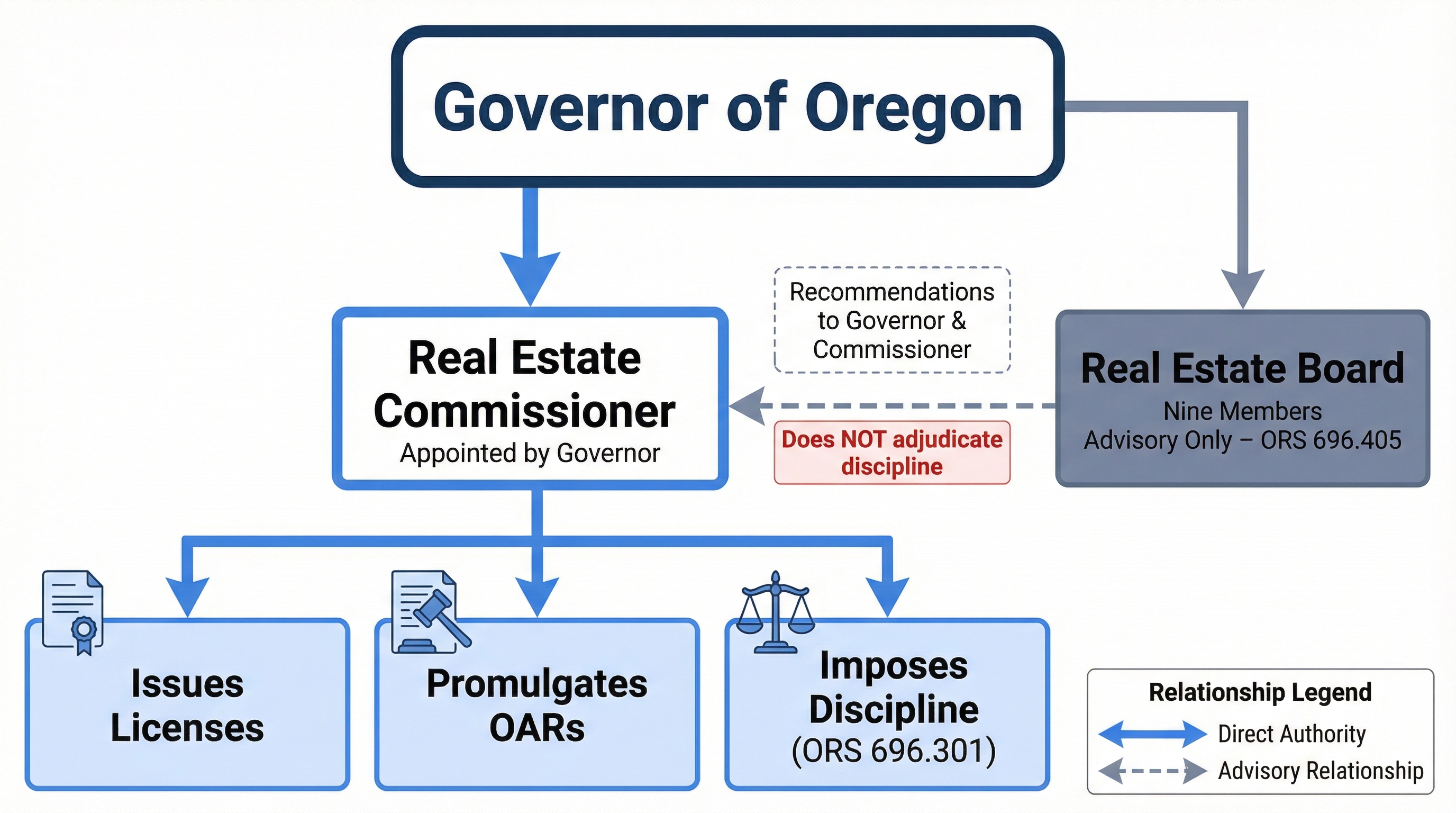
Figure 1: OREA Governance Structure; the Commissioner holds sole statutory authority, and the Board’s role is advisory only.
Enforcement of Valuation Standards
The Oregon Real Estate Agency (OREA) enforces valuation standards through state licensing laws that outline grounds for discipline. OREA does not enforce the Uniform Standards of Professional Appraisal Practice (USPAP), as that is the domain of the Appraiser Certification and Licensure Board (ACLB). Instead, OREA strictly polices the conduct surrounding your pricing opinions. You are subject to discipline by the Commissioner if your CMA or Letter of Opinion involves:
- Material Misrepresentation: Knowingly providing false data to support a desired price.
- Incompetence: Attempting to value a complex commercial property or special-use facility without the necessary experience or training.
- Failure to Supervise: A principal broker failing to review the valuation activities of their associated brokers.
When you stay within the authorized scope of “estimating worth or price” for a listing or buyer interaction, OREA is your sole regulator. If you cross the line into “appraising,” the Appraiser Certification and Licensure Board steps in. This is a boundary we will examine next.
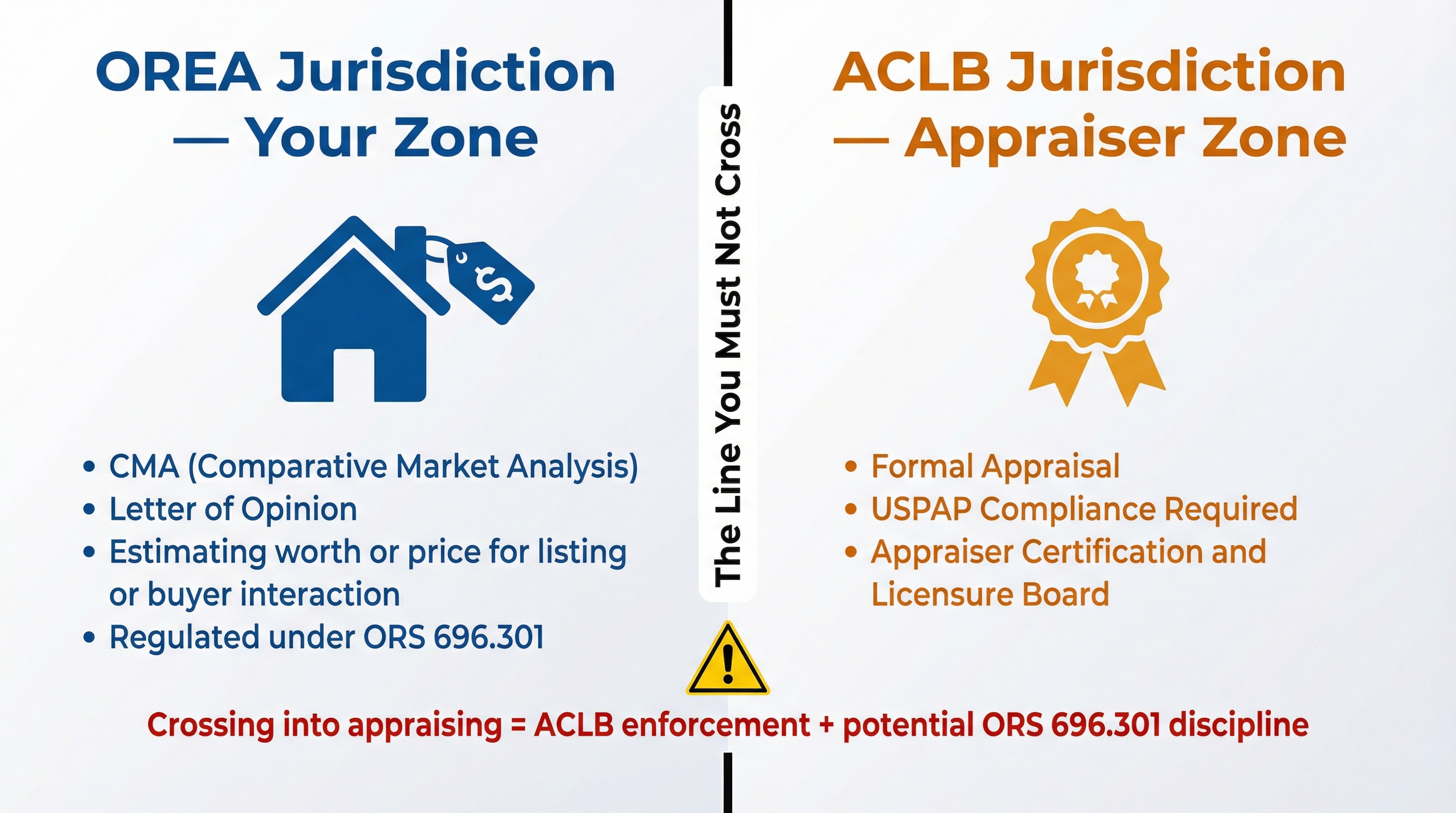
Figure 2: Regulatory Boundary. Stay within ‘estimating worth or price’ to remain under OREA jurisdiction. Crossing into formal appraisal triggers ACLB oversight.
Which of the following is listed on the slide as a ground for discipline by the Commissioner in connection with a CMA or Letter of Opinion?
1.1.2. Appraiser Certification and Licensure Board (ACLB)
While the Oregon Real Estate Agency operates under a single Commissioner, the Appraiser Certification and Licensure Board (ACLB) is structured differently.
Established by Oregon law, the ACLB is a semi-independent regulatory body with one specific goal: to ensure Oregon complies with federal valuation laws¹.
While the Real Estate Agency regulates your conduct to protect consumers, the ACLB exists to protect public trust in the neutrality and objectivity of appraisals.
Instead of a single leader, a board of eight members appointed by the Governor² governs the ACLB. Oregon law carefully defines this board’s composition: five certified or licensed appraisers, one financial institution representative, one appraisal management company representative, and one public member. This peer-review system is essential.
Because appraisal issues often involve complex methodology, fellow practitioners are best suited to review these cases. This ensures that disciplinary decisions come from deep industry expertise rather than regulatory theory.
To understand why this distinct regulatory structure exists, we must examine its federal origins.
Title: Federal Mandates and Appraiser Credentials
Federal Mandates: FIRREA
Why does Oregon have a separate agency for appraisers? Federal law requires it. Following the savings and loan crisis of the 1980s, Congress passed Title XI of the Financial Institutions Reform, Recovery, and Enforcement Act (FIRREA) in 1989. Because widespread valuation fraud had threatened the financial system, FIRREA required states to set up regulatory agencies to oversee appraiser licensing.
States can structure these agencies differently. Oregon established the Appraiser Certification and Licensure Board (ACLB) as a semi-independent state agency under state appraisal law, separate from the Real Estate Agency governed by state licensing law. This structure keeps Oregon in compliance with federal standards, allowing local lenders to fund federally backed mortgages. Without this compliance, Oregon’s real estate finance market would collapse.
The Credentialing Hierarchy
Appraiser credentials follow a strict hierarchy. While your broker license covers all property types, appraisers must hold the specific credential that matches a property’s complexity:
- State Licensed Appraiser: Approved for non-complex residential 1-4 unit properties with a transaction value under $1,000,000.
- State Certified Residential Appraiser: Approved for all 1-4 unit residential properties, regardless of value or complexity.
- State Certified General Appraiser: The highest credential, approved to appraise all real estate types, including complex commercial, industrial, and agricultural properties.
This hierarchy reflects the technical difficulty of valuation work. A licensed appraiser can value a standard suburban home, but a certified general appraiser is required for a mixed-use development downtown.
While these credentials apply to appraisers, the ACLB’s authority also directly impacts real estate brokers.
The Oregon Appraiser Certification and Licensure Board (ACLB) regulates appraisers, but its authority also extends to real estate brokers. State law prohibits anyone from doing appraisal work without a proper license, certificate, or registration.
While there are exceptions, such as when you perform a competitive market analysis (CMA) or a letter of opinion, you must not cross the line into appraisal territory. Doing so violates state valuation laws. For example, you cannot provide a valuation for a tax appeal, estimate value for litigation, or perform a broker price opinion (BPO) for a $300,000 refinance.
If you exceed your authority, you face a double regulatory threat. The Real Estate Agency can discipline your license, and the ACLB can independently issue civil penalties and fines for practicing appraisal without a license.
With this enforcement framework in mind, we will next examine the specific legislative purposes that define these jurisdictional boundaries.
With the enforcement powers of the Oregon Real Estate Agency and the Appraiser Certification and Licensure Board (ACLB) clearly established, we must look at why Oregon law keeps these two areas strictly separate. This dual-regulatory structure points to two very different goals. Understanding these distinct purposes explains why your pricing opinion as a broker is treated differently from an appraiser’s valuation.
Advocacy vs. Neutrality
The main jurisdictional divide comes down to your relationship with your client. Under Oregon real estate licensing law, professional real estate activity is a matter of public concern and must be conducted with high fiduciary standards [1]. As a broker, you are your client’s advocate. When you prepare a comparative market analysis (CMA), you analyze the market to help a seller maximize their return or assist a buyer in getting a property at the best possible terms.
State appraisal law exists for a completely different purpose [2]. It requires all real estate appraisals to be performed under uniform standards by competent, unbiased individuals. Appraisers must act with independence, impartiality, and objectivity. While you work to achieve a specific price for your client, the appraiser works to verify objective value. Because advocacy and neutrality are mutually exclusive, you cannot serve as both the broker and the appraiser in the same transaction.
The Statutory Distinction: Price vs. Value
Oregon law reinforces the split between real estate brokers and appraisers by clearly separating what each can produce.
As a licensed real estate broker, your authority is limited to giving an opinion of “price” or “estimated worth.” State law permits you to write a “Letter of Opinion” about the price of a property [1]. The law treats this as a consulting service meant to help facilitate a transaction, such as securing a listing or helping a buyer.
The appraiser’s territory is completely different. State law prohibits you from performing “real estate appraisal activity” unless you have a formal appraisal license or certification [2]. Appraisal activity means creating and issuing an opinion about the actual “value” of real property. When we perform a Comparative Market Analysis (CMA) or a Letter of Opinion, “value” only refers to the estimated worth or price. It is not an appraisal, and it does not follow national appraisal standards.
This difference in terms has serious legal weight. If you claim to provide a “valuation” or an “appraised value,” you are not just using loose words. You are claiming a legal authority that you do not have.
Beyond these basic definitions, the two regulatory systems also differ in who they are designed to protect.
According to the slide, what does "real estate appraisal activity" mean, which a broker is prohibited from performing without an appraisal license or certification?
Under Oregon law, how is a broker's Letter of Opinion about the price of a property characterized?
Protection of Person vs. Protection of System
The final aspect of legislative purpose concerns who we are protecting.
Broker regulations protect the individual consumer. The Agency’s oversight ensures that when a seller relies on your CMA to set a list price, they receive competent advice protecting their financial equity.
In contrast, appraiser regulations protect the financial system. Following the savings and loan crisis, federal and state laws prioritized the safety of the lending market. The Oregon Appraiser Certification and Licensure Board (ACLB) enforces standards to ensure that the collateral underlying a mortgage loan actually exists and supports the loan amount. This system-wide focus explains why appraiser regulations are more rigid and formulaic than the flexible, market-oriented analysis permitted for brokers.
With this foundation in place, we can now define the precise regulatory line where a broker’s opinion crosses into appraisal territory.
The Statutory Safe Harbor for Brokers
In Oregon, state valuation statutes begin with a clear rule: you cannot engage in real estate appraisal activity unless you hold an appraiser certification, license, or registration[^1]. The law defines this activity very broadly as preparing, completing, or issuing an opinion about the value of real property. If we looked at this rule in isolation, it would make preparing a competitive market analysis (CMA) illegal for real estate brokers. However, the law provides a specific exemption that protects you.
The state’s appraisal law explicitly exempts real estate licensees when they perform duties authorized under state real estate licensing law[^2]. This safe harbor applies only when your work fits the exact definitions of a Competitive Market Analysis (CMA) or a Letter of Opinion under state licensing statutes[^3][^4]. A CMA is a process used to recommend a listing or offer price. A Letter of Opinion expresses a conclusion about the price of real estate. If your work goes outside these definitions, you lose your legal protection.
Pay close attention to the specific language used. As a broker, you provide opinions of price, while appraisers determine value. This distinction is highly important. In the appraisal profession, “value” is a technical term that requires compliance with national appraisal standards. Under state administrative rules, when you use the term “value” in a CMA or Letter of Opinion, it means only the estimated worth or price for a specific property and is not arrived at by any method of appraisal[^5]. Your reports are pricing recommendations for transactions, not formal value determinations. You must avoid terms like “appraised value” or “true market value,” as they imply a level of analytical neutrality that your license does not permit.
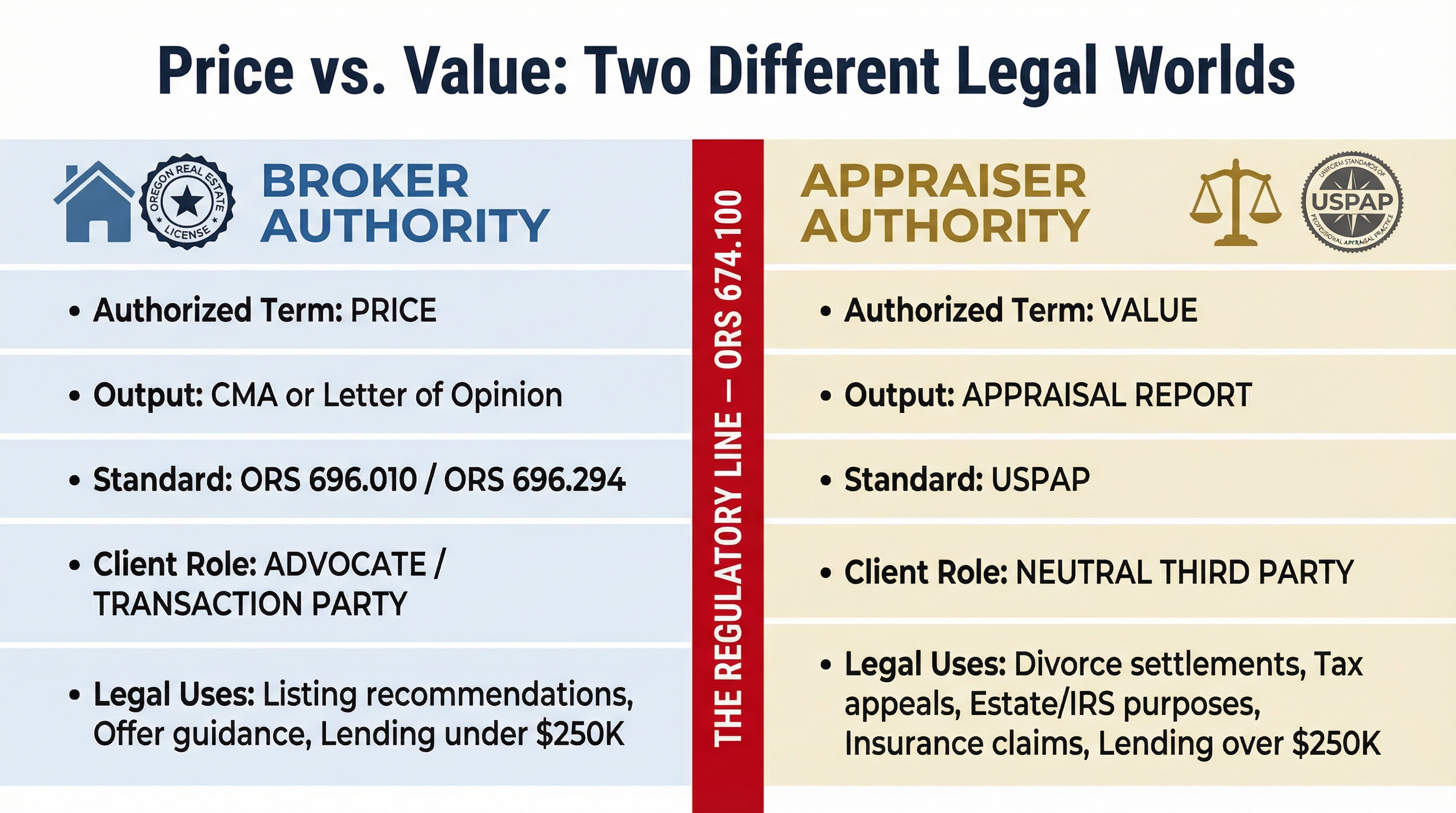
Figure 1: The statutory distinction between broker price opinions and appraiser value determinations defines the boundary of your legal authority.
Understanding this boundary is critical, as crossing it into unauthorized valuations carries severe regulatory consequences.
Prohibited Valuation Scenarios
As a broker, you cross a dangerous regulatory line when you perform property valuations outside the normal course of real estate business. For example, if a former client asks for a quick letter stating their home’s value for a divorce settlement, you must decline. Even if you are competent and the work takes under an hour, courts require neutral, third-party valuations for dividing assets. Since brokers act as advocates rather than impartial parties, writing that letter counts as unlicensed appraisal activity.
Other scenarios that require a licensed appraiser include:
- Tax Appeals: Homeowners contesting property tax assessments need a formal appraisal. A broker’s opinion carries no weight with quasi-judicial tax boards.
- Estate Settlements: Executors often need a date-of-death valuation for IRS purposes, which is a federal tax matter.
- Insurance Claims: Licensing is required to resolve disputes over replacement costs or loss of value.
- High-Value Lending: You can perform a collateral analysis for a lender’s internal use, but state rules limit this authority to loan transactions of less than $250,000 [1]. A lender requesting a BPO on a $400,000 refinance must be declined.
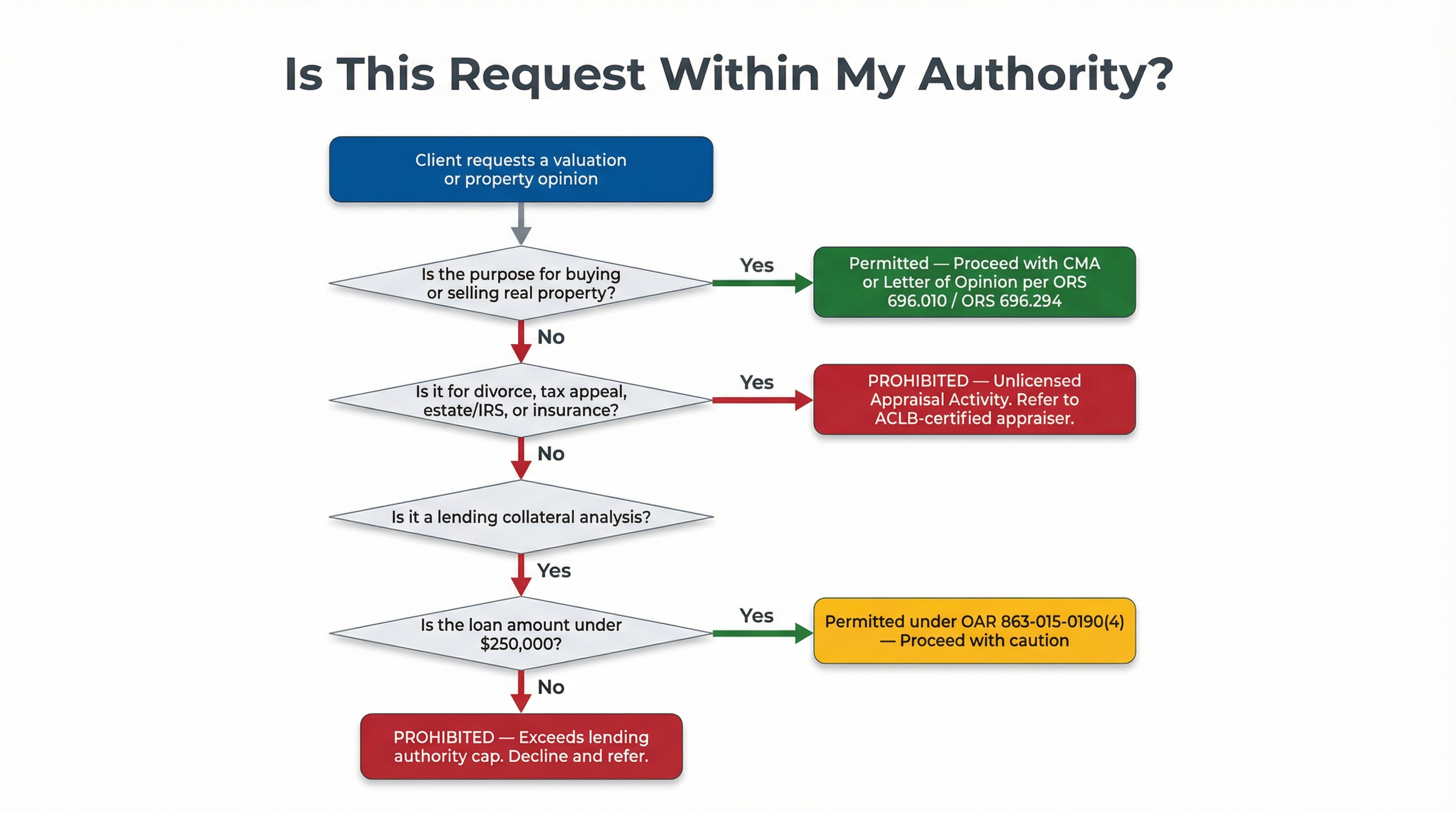
Figure 2: Use this decision tree to evaluate any valuation request before agreeing to perform work.
To protect yourself and your business when these unauthorized requests arise, you must establish a clear refusal protocol.
Why does the slide say a broker's opinion is of no use to a homeowner contesting a property tax assessment?
A homeowner asks a broker to prepare a valuation to support an appeal of the county's property tax assessment. Why must the broker decline?
The Broker Refusal Protocol
Clients sometimes ask you for prohibited services to save the cost of a full appraisal. When this happens, use a direct and educational refusal protocol:
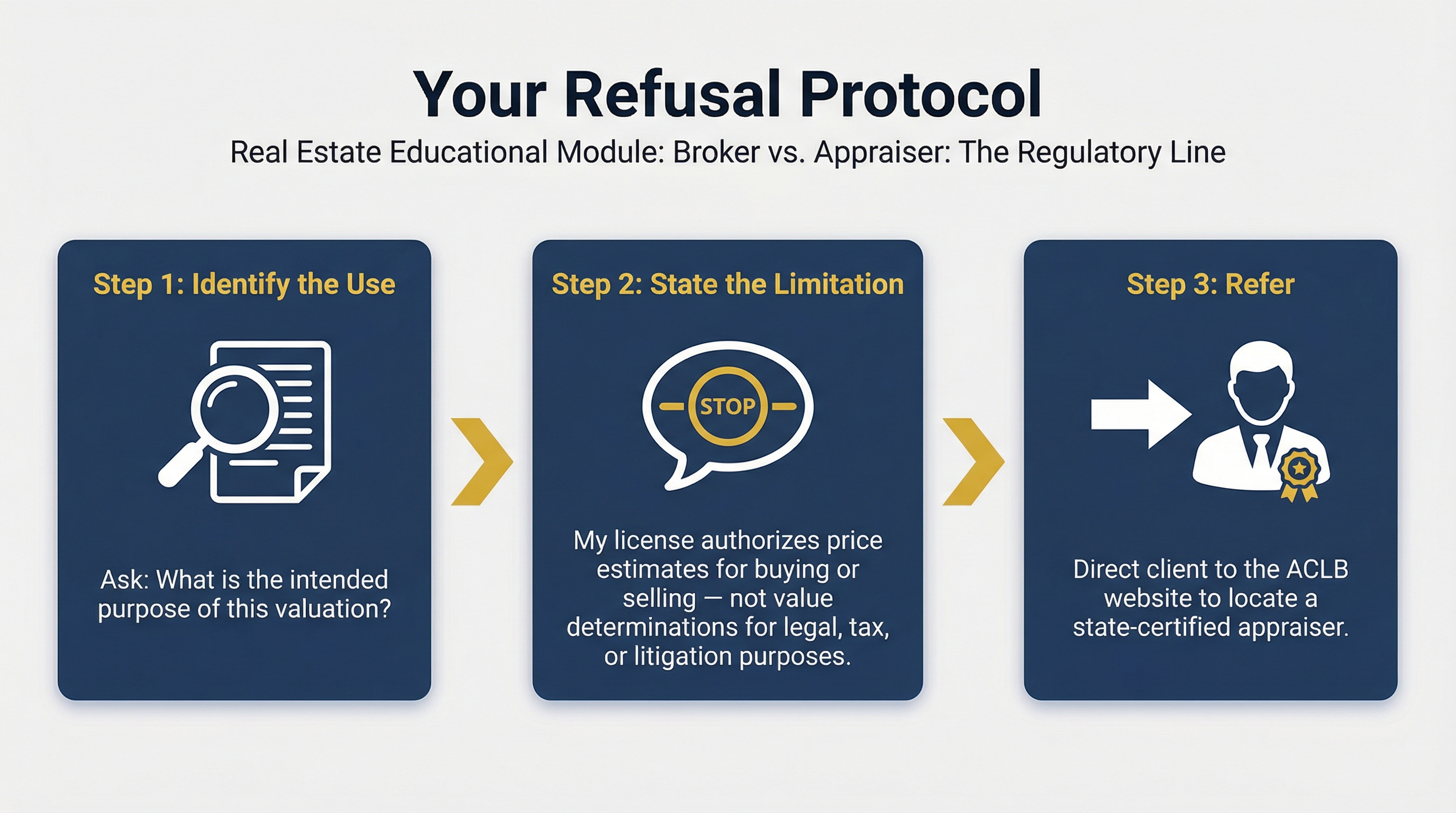
Figure 3: Follow this three-step protocol whenever a client requests a valuation outside your authorized scope.
- Identify the Use: Ask the client, “What is the intended purpose of this valuation?”
- State the Limitation: If they need it for a divorce, tax, or legal issue, state: “My license authorizes me to estimate prices for buying or selling. It does not authorize me to determine value for legal, tax, or litigation purposes.”
- Refer: Direct the client to the Appraiser Certification and Licensure Board (ACLB) website to find a state-certified appraiser.
With the boundaries of broker authority clearly established, we can now examine the precise statutory definition of what constitutes an “appraisal” under Oregon law.
Under the broker refusal protocol, where should a broker direct a client who needs a valuation for a tax or legal issue?
Defining the Appraisal
Oregon law strictly regulates who can perform a real estate appraisal. Understanding where this regulatory line is drawn helps us protect our license while serving clients.
Under state law, you cannot engage in real estate appraisal activity without a valid certificate, license, or registration from the Appraiser Certification and Licensure Board [1]. An exception to this rule is your Competitive Market Analysis (CMA). The law defines an appraisal through three specific steps: preparing, completing, and issuing an opinion about a property’s value on a specific date.
This means you do not break the law simply by having an opinion about what a property is worth. The violation happens when you write down that opinion and give it to a client as a formal representation of value instead of an estimated price.
Federal Triggers and the $400,000 Threshold
Clients cannot use your CMA to get a home loan due to Federally Related Transaction (FRT) rules [2]. These are financial transactions regulated by federal agencies that require professional appraisal services.
However, federal rules establish a limit below which a formal appraisal is not required. This limit is $400,000 for residential transactions, established in October 2019 and reflected in state rules [3]. Residential transactions at or below $400,000, and commercial transactions at or below $500,000, can use an “evaluation” rather than a full appraisal. Non-appraisers can perform these evaluations, which theoretically opens the door for real estate brokers.
As we will see next, state-level restrictions in Oregon significantly limit this federal option.
The Oregon Constraint and the Evaluation Trap
Federal rules don’t dictate your ultimate limits. State law is often more restrictive, and in Oregon, this difference can lead to a compliance trap.
In Oregon, your authority to perform a Lending Collateral Analysis for a financial institution is capped strictly at $250,000. You may only provide this service if the loan transaction is under $250,000 and the analysis is strictly for the institution’s internal use.
The Evaluation Trap
Imagine a local credit union asks you to perform a valuation for a client refinancing a $450,000 home. The loan officer claims that because it’s under the federal threshold, they don’t need a full appraisal and can use a broker price opinion instead.
You must decline this request.
While the credit union might be compliant with federal rules, you’d violate state law by accepting. The transaction exceeds your state-authorized limit of $250,000. This creates a regulatory conflict where the federal ceiling is high, but your state limit is low.
Crossing this line is considered unlicensed real estate appraisal activity, which can lead to civil penalties from the Appraiser Certification and Licensure Board (ACLB). You must always follow the stricter state limit.
Besides the loan transaction being under $250,000, what other condition does the slide place on a broker performing a Lending Collateral Analysis for a financial institution?
Under Oregon law, a broker may perform a Lending Collateral Analysis for a financial institution only when which conditions are satisfied?
While our previous discussion on limits and the $250,000 cap show what we cannot do, state administrative rules also establish your positive authority. You have permission to provide Competitive Market Analyses (CMAs) and Letters of Opinion in three specific situations:
- Pursuing a Listing: You can provide an opinion of value to a homeowner to help you secure a listing agreement.
- Assisting a Buyer: You can analyze market data to help a buyer determine a strategic offer price.
- Providing a Broker Price Opinion (BPO): You can write a “Letter of Opinion” (commonly called a BPO), subject to strict rules. This includes the “Lending Collateral Analysis” exception, which is only for a financial institution’s internal use and capped at loan transactions under $250,000.
If a client’s request falls outside these three situations, you don’t have the authority to fulfill it. To protect these boundaries, Oregon law makes a clear legal distinction between an estimated price and a formal appraisal value.
Oregon law clearly separates your work as a real estate broker from that of a formal appraiser. State rules clarify that the term “value” in a Comparative Market Analysis (CMA) or Letter of Opinion simply means the estimated worth or price of a specific property.[1] This estimate is legally distinct from the formal “value” determined in appraisals.
When you write a CMA, you are not establishing a USPAP-compliant “market value.” Instead, you suggest a listing price or an offer price based on market trends. This distinction protects you from being held to the technical standards of an appraiser. As a broker, your role is to analyze the market for your client’s benefit, rather than serving as a neutral party verifying value for the public trust.
Because your authority is tied to normal real estate activities like buying and selling, you cannot provide valuation services for specific legal scenarios. You must decline requests for:
- Divorce Proceedings: Courts require a neutral appraisal to divide assets fairly.
- Tax Assessments: Homeowners challenging county tax assessments must provide formal appraisal evidence.
- Condemnation and Eminent Domain: These government actions require valuation that complies with strict appraisal guidelines.
- Probate: Settling an estate requires a formal date-of-death appraisal for tax purposes.
Even if clients ask you to perform these services to save money, you must decline.
If you hold both a real estate broker license and an appraiser certification, you must keep these roles completely separate. This separation prevents a conflict between a broker’s duty to advocate for their client and an appraiser’s duty to remain neutral.
State administrative rules adopt the Uniform Standards of Professional Appraisal Practice (USPAP).[2] The USPAP Ethics Rule requires appraisers to operate with total impartiality. You cannot act as an advocate for a client and as a neutral appraiser in the same transaction. You must not use your broker license to write substandard valuation reports or switch roles in the middle of a transaction to bypass regulations.
Now that we understand what you are authorized to do, we must next examine the different levels of licensure in Oregon to understand who may perform these tasks without supervision.
1.2.3: Oregon License Structure
The context of your real estate work defines what you can do. However, whether you can work independently depends on your license level. Oregon uses a three-tier licensing structure that dictates supervision requirements rather than limiting the types of properties you handle.
1. Real Estate Broker
The first level of licensing is simply called a Real Estate Broker. Oregon has no separate salesperson license category. To earn this entry-level license, you must complete 150 hours of education and pass the state exam. However, you cannot operate independently. You must associate with and be supervised by a Managing Principal Broker. Under state law, you have the authority to prepare and sign a Competitive Market Analysis (CMA) or a Letter of Opinion. You do so as a representative of your registered business, subject to your manager’s oversight.
2. Principal Broker
The second tier is the Principal Broker license. This advanced license requires at least three years of active experience as a broker and completion of the Brokerage Administration and Sales Supervision (BASS) course. A Principal Broker can perform professional real estate activities independently or supervise other licensees.
3. Managing Principal Broker
Legislation taking effect on January 1, 2026, formalized the role of the Managing Principal Broker. This statutory designation identifies the individual responsible for a Registered Business Name (RBN). The Managing Principal Broker carries ultimate liability for all professional real estate activities conducted by the business. When you create a pricing opinion, this manager ensures your work complies with state administrative rules and that you are competent to perform the analysis.
Authority vs. Autonomy
A critical distinction exists between professional authority and personal autonomy. In real estate appraisal, license levels strictly limit practice based on property value. Oregon real estate licensing works differently. State administrative rules grant the authority to prepare CMAs and Letters of Opinion to both Real Estate Brokers and Principal Brokers equally.
- Parity: A newly licensed Broker has the exact same legal authority to write a Broker Price Opinion (BPO) as a Principal Broker. The law does not restrict standard Brokers to residential properties or limit them to certain property values.
- Constraint: The real limit on your practice is competence and supervision. If you try to value a complex industrial warehouse without experience, you violate your legal duty of reasonable care and administrative rules prohibiting incompetence.
Supervision and Retention
Because standard Brokers cannot work independently, any CMA or BPO you create is legally an action of the registered business. Your Managing Principal Broker must ensure that copies of your Letters of Opinion are kept in the brokerage records for six years. If a manager decides you do not have the necessary experience to price a specific property type, they are legally required to intervene.
Summary of Differences
| Feature | Real Estate Broker | Principal Broker | Appraiser (Licensed/Certified) |
|---|---|---|---|
| Valuation Authority | CMA & Letter of Opinion | CMA & Letter of Opinion | Appraisal (USPAP Compliant) |
| Scope Limitation | Competence-based | Competence-based | Strictly license-based |
| Independence | Must be supervised | Can be independent | Independent |
| Oversight | Managing Principal Broker | Self or Managing PB | ACLB |
With the players identified, we can now examine the specific deliverables you’re authorized to create. While the terms are often used interchangeably in practice, Oregon law distinguishes between a Competitive Market Analysis (the method or process used to estimate value) and a Letter of Opinion (the written document resulting from that analysis). The law draws a sharp line between these broker opinions and formal appraisals.
1.3: CMA vs. Letter of Opinion (BPO): Definitions and Uses
The difference between a Competitive Market Analysis (CMA) and a Letter of Opinion is more than just semantic. Oregon law separates your authority as a licensee into two distinct concepts: the analytical work you perform, and the written document you deliver. Understanding this division is critical because each carries different regulatory requirements.
The Process: Competitive Market Analysis (CMA)
The CMA itself isn’t a document. State law defines a Competitive Market Analysis as a method or process used by a real estate licensee to accomplish two specific goals:
- Pursuing a listing agreement.
- Formulating an offer to buy real estate.
When you pull comparable sales, adjust for property differences, and analyze market trends, you’re conducting a CMA. This is the intellectual work of valuation. Oregon law clarifies that this process can include analyzing market conditions, public records, and past transactions, but its singular purpose is to recommend a price or lease consideration.
The Product: Letter of Opinion
If the CMA is the process, the Letter of Opinion is the deliverable. State law defines this as the written document that shows your final pricing conclusion. This letter is the direct result of your competitive market analysis.
Every written pricing recommendation you provide is a Letter of Opinion under state law. It doesn’t matter if it’s a quick one-page email or a detailed marketing proposal. The legal classification is the same. Because it’s a formal opinion, state law requires specific disclaimers to distinguish it from a certified appraisal, requirements we’ll cover in Section 1.4.
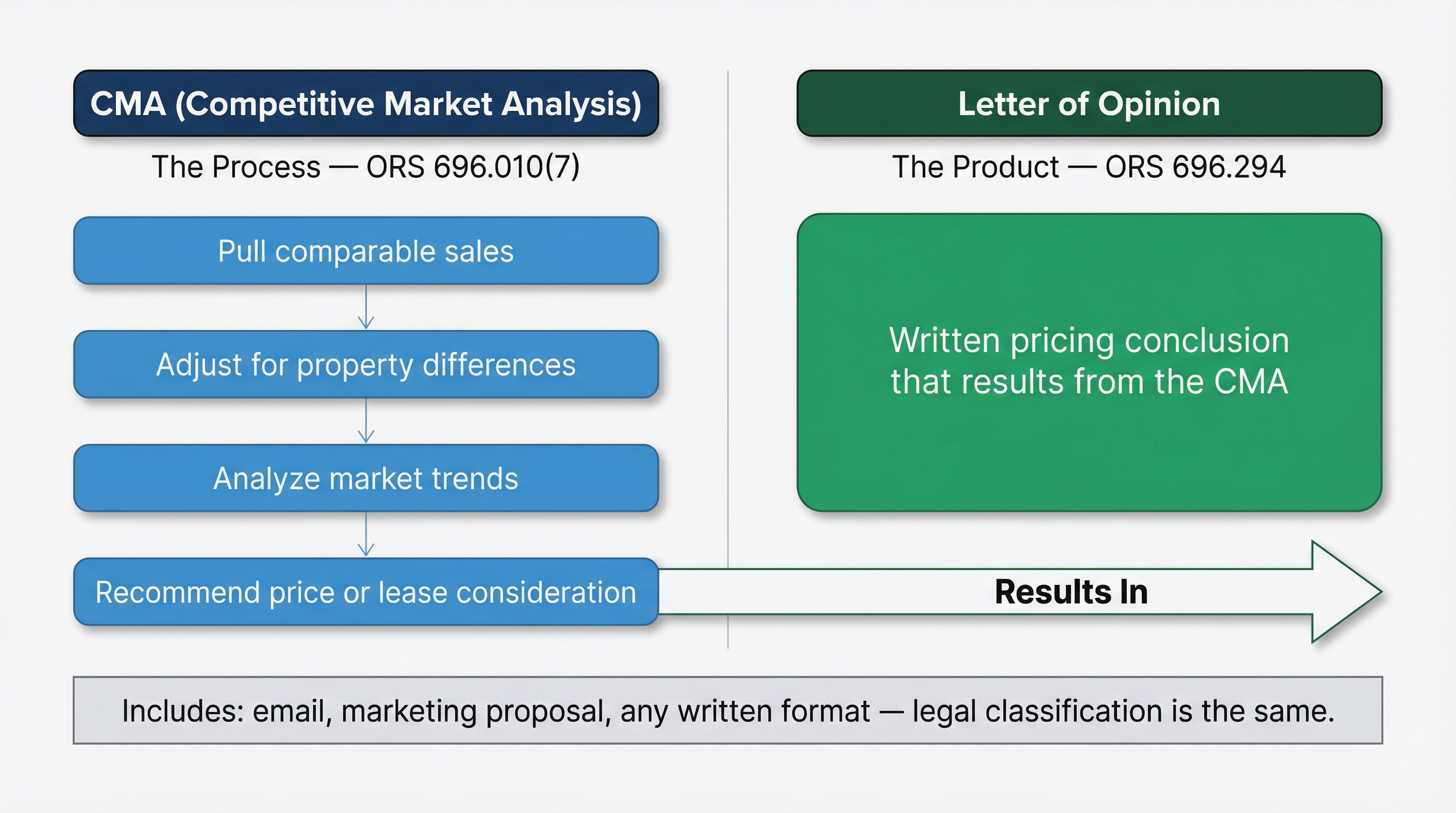
Figure 1: CMA is the process; the Letter of Opinion is the written product that results from it.
Next, we’ll examine how industry terminology like “BPO” fits into Oregon’s regulatory framework.
State law defines a Competitive Market Analysis (CMA) as a method or process used by a licensee to accomplish which two goals?

Instructor
Details
- Clock Hours: 4.5
- Format: Slides - includes video, text & images